
In difficult times, you don't have to face it alone. Our team is available to guide you and help you immediately when you need it most.
Contact
Newsletter


ORIENTACIÓN PARA FAMILIAS
When is the right time to consider hospice care?
No siempre es fácil saber cuándo dar este paso. Estamos aquí para ayudarte a entenderlo con claridad y acompañarte sin presión.
You Are Not Alone
It's normal to have doubts at this time.
Many families in Puerto Rico reach this point with fear, uncertainty, or even guilt, especially when faced with difficult decisions about the well-being of a loved one. It is completely normal to feel this way and to question what is best at this time.
There is no "perfect moment", but there are signs and guidelines that can help you make a decision with more clarity, confidence and peace of mind.
This space is designed to guide you, not to pressure you.

.jpg)
Understanding the Process
Prioritize well-being
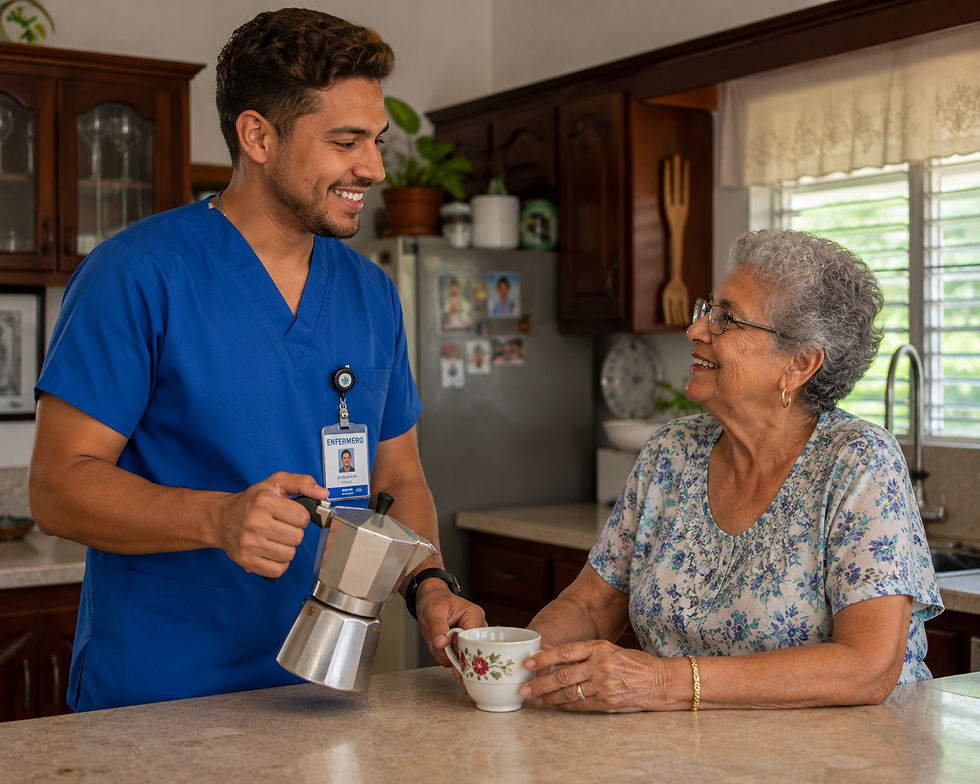
Considering hospice care means prioritizing quality of life, pain relief, and professional support at home.
It also involves having a specialized team that provides medical, emotional and spiritual support, adapted to the needs of each patient and their family.
It is a decision focused on the well-being of the patient and on providing comprehensive support to the family.

Hospitalizaciones frecuentes o empeoramiento de la condición
Cuando las visitas al hospital se vuelven más frecuentes o la condición no mejora, puede ser una señal de que se necesita un enfoque diferente de cuidado.

Dificultad para controlar el dolor u otros síntomas
Si el dolor, la falta de aire u otros síntomas no se logran manejar adecuadamente, el cuidado de hospicio puede ofrecer alivio especializado.

Pérdida de peso o debilidad progresiva
La pérdida de peso sin causa aparente o una debilidad creciente pueden indicar un deterioro en la salud significativo adicional que requiere mayor apoyo.

Disminución significativa de movilidad o autonomía
Cuando la persona ya no puede realizar actividades básicas por sí misma, es importante considerar opciones que brinden asistencia continua.

Cambios en la respiracióno fatiga constante
La dificultad para respirar o el cansancio extremo pueden afectar la calidad de vida y requieren atención especializada urgente y continua de forma inmediata.

Difficulty eating or swallowing food
Problems eating or swallowing can increase the risk of complications and are a sign that additional care is needed in the patient's home.
Medical Signs
Medical indicators to consider
IMPORTANT SIGNS
When caregiving starts to feel overwhelming, it's also a sign that they don't have to do it alone.
Environmental Signals
When the situation also impacts the family
In addition to changes in the patient's health, the family environment can also reflect important signs. Paying attention to how caregivers and loved ones feel and cope can help identify the need for additional support. Sometimes, emotional and physical exhaustion accumulates silently, and recognizing it early allows for seeking appropriate support for everyone.
Physical and emotional exhaustion of the caregiver
Feeling of not knowing what to do or how to help
Need for additional support at home
Difficulty managing the situation within the family
Seeking greater peace and companionship
Changes in family dynamics or conflicts related to caregiving

Environmental Signals
When the situation also impacts the family
IMPORTANT SIGNS
When caregiving starts to feel overwhelming, it's also a sign that they don't have to do it alone.

In addition to changes in the patient's health, the family environment can also reflect important signs. Paying attention to how caregivers and loved ones feel and cope can help identify the need for additional support. Sometimes, emotional and physical exhaustion accumulates silently, and recognizing it early allows for seeking appropriate support for everyone.
Physical and emotional exhaustion of the caregiver
Feeling of not knowing what to do or how to help
Need for additional support at home
Difficulty managing the situation within the family
Seeking greater peace and companionship
Changes in family dynamics or conflicts related to caregiving
Palliative Care
The Right Time: When to Choose Palliative Care?
Many people confuse palliative care with end-of-life care, but the reality is that it's comprehensive support that can begin from the moment a serious illness is diagnosed. The ideal time to become involved is when the treatment approach needs to balance a cure with quality of life.

Why choose us now?
Priority on Wellbeing: We focus on alleviating the physical, emotional, and spiritual suffering of both the patient and their family.
Continuity of Treatment: Unlike traditional hospice, palliative care can accompany curative treatments that the patient is already receiving.
Informed Decisions: We help the family understand the stages of the disease, avoiding unnecessary crises and aggressive treatments that do not provide well-being.
Coverage and Payment Options: We offer our services through leading plans such as MMM Advantage and MCS Advantage, in addition to covering Medicare, Medicare Advantage, private plans, and the government health plan. We also have direct payment (cash) options for those without these coverages.

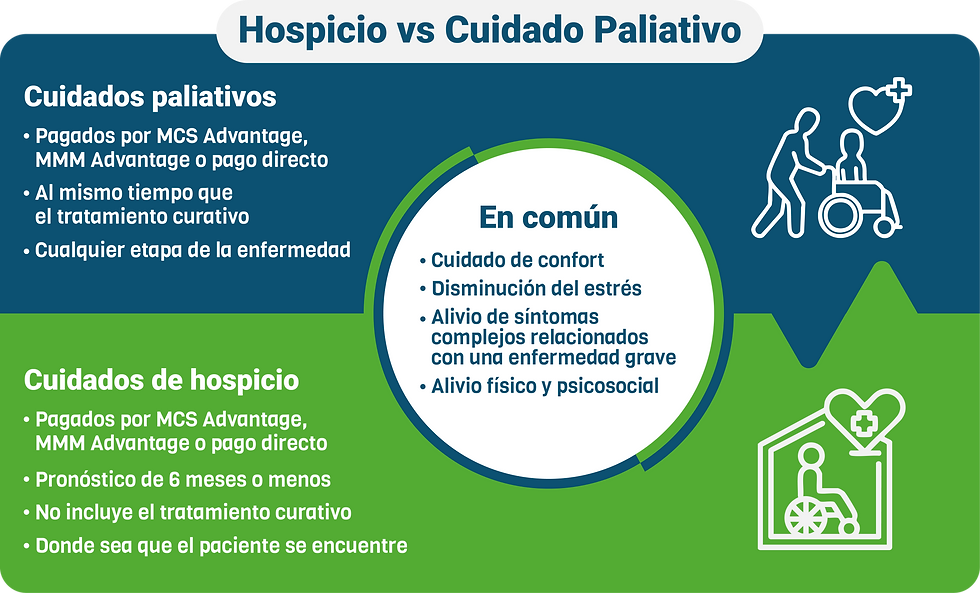
Differences between Palliative Care and Hospice
Which option is right for my loved one?
Although both services share the mission of providing relief and comfort, they are applied at different stages of an illness. Understanding these differences allows for informed decisions that ensure the patient's dignity at all times. The following infographic outlines these differences.
Medical Evaluation
Eligibility Criteria: A Guide for Physicians and Family Members
In order for a patient to receive our care, we evaluate a series of clinical indicators that ensure our intervention is timely and effective.
Detailed Clinical Criteria
High Complexity Diagnoses: We treat conditions such as Alzheimer's in advanced stages, Cancer, Kidney Failure, COPD (Chronic Lung Disease), CHF (Congestive Heart Failure) and ALS.
Functional Impairment: Patients who show a progressive loss of ability to perform daily activities or significant unintentional weight loss.
Hospital Frequency: People who have had multiple emergency room visits or hospital readmissions in recent months due to the same condition.
Complex Symptom Management: Cases where pain, severe respiratory distress, chronic nausea, or agitation are not being adequately controlled by standard treatment.


Clearing Up Doubts
Answers to common questions about hospice care
It's normal to have questions, doubts, or worrying thoughts when considering this type of care, especially when it comes to important decisions for a loved one.
Here we answer some of the most common questions to help you gain more clarity, feel supported, and make decisions more calmly during this process.
No. Hospice care can provide support for months, depending on the patient's condition. Its goal is to improve quality of life, manage symptoms, and offer ongoing support to both the patient and their family throughout the process.
No. Elegir hospicio no es rendirse, es tomar una decisión consciente de priorizar el confort, el alivio del dolor y el bienestar emocional. Es enfocarse en vivir con dignidad y apoyo en una etapa que requiere mayor cuidado.
No. The family and the patient are always actively involved in decision-making. The hospice team provides guidance and support, but respects the preferences, values, and wishes of each family, ensuring that every decision is made in an informed and collaborative manner.
In many cases, yes. There are medical plans and programs that cover hospice care. Our team can help you check your coverage, explain the benefits, and guide you through the eligibility process.
It is usually provided in the patient's home, allowing for greater comfort, proximity to loved ones, and a familiar environment. It can also be offered in other facilities depending on the patient's needs.
Yes. Hospice care is completely flexible. If the patient's condition changes or the family decides to explore other options, it's possible to leave the program at any time without complications.